As St Jude’s Church approaches its 150th anniversary, we have taken a look at a copy of the 1977 Centenary Publication of St Jude’s History. Originally written by Mr Ken McLennan, we have edited it a section of it here.
Nottingham Expands
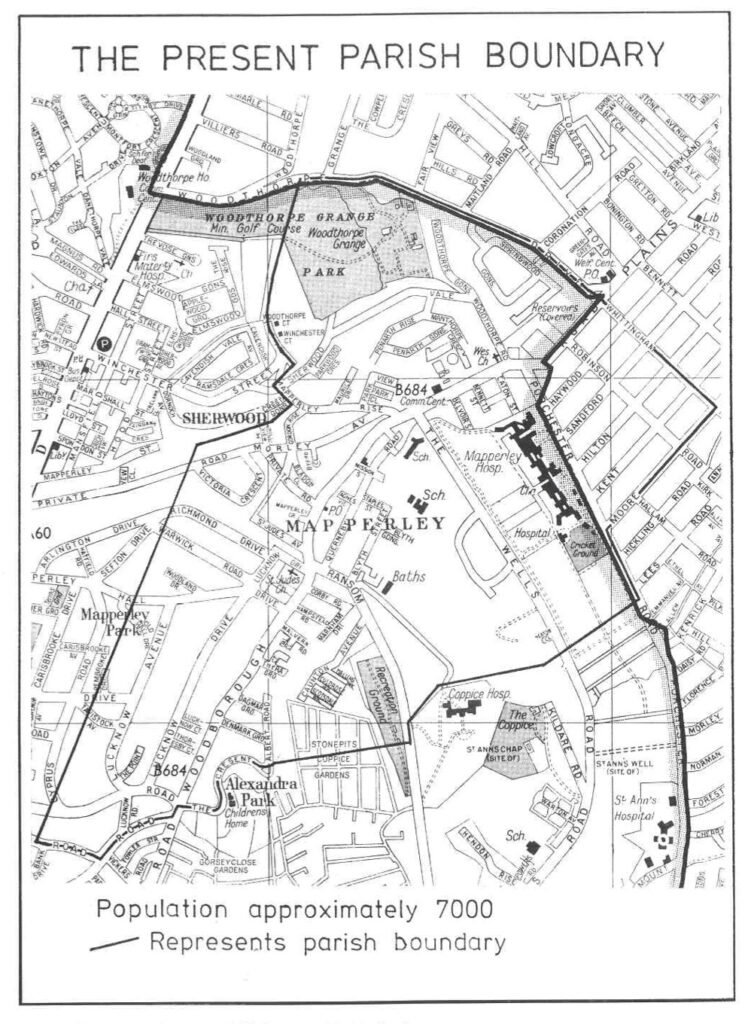
Imagine it is 1857 and you are standing at the top of the hill where St Judes Church now stands. Woodborough Road had only been in existence as a metalled road for about six years. There was Mapperley Park in its true sense, a large estate around the very grand Mapperley Hall with its plantations of oak, ash, elm and beech. Going down the hill on the other side of the road were the common lands of the Clayfield. These had been enclosed but little building had taken place. Ransom Road (formerly Coppice Road) had been constructed and passed Coppice Farm on the left where the Coppice Hospital ‘Lunatic Asylum’ was under construction and would open in 1859. The Coppice Recreation Ground was then the Rifle Range of the Robin Hoods provided by Col. Wright on the site of an old brickyard. Further down were the newly laid out Hunger Hill and StonePit Coppice gardens.
The hamlet of Mapperley consisted of a few houses in Staples Street, Blythe Street and Querneby Road, named after families who were handed land from Lord Byron’s estate.
On the main road was an inn where the Duke of Cambridge now stands and scattered houses continued along the right hand side including a row of cottages near the present Porchester Road. On the left hand side Private Road was the only through road to Mansfield Road, but houses were few and mainly confined to the Sherwood end. Beyond Private Road stretched the brickyards. Mapperley was for centuries famous for brickmaking but by this time the yards were being concentrated in the area from Private Road to Scout Lane (now Woodthorpe Drive).
In 1857 this tiny hamlet tucked away in the corner of St. Mary’s parish was a long way from the main church in the Lace Market. Canon Brooks arranged for services to be held on Sunday evenings in the offices of the Mapperley Brick Company, these services being taken by a Reader. Services continued to be held in the offices until 1860 when a church day school was opened and the Sunday evening services were transferred there. Thus St. Jude’s Day School, as it was named later, has the proud record of being the first ecclesiastical building in Mapperley. The school and mission came under the control of St. Ann’s Church when it was built in 1864 and a new parish created.
In the 1860s there was a concentration of brickmaking in the yards of Mapperley and houses for workers began to appear on the right hand side of Woodborough Road. There were also plans for another mental hospital to be built on Porchester Road. With the development of the area, it was inevitable that a meeting was called in 1876 for the sole purpose of erecting a church in Mapperley.
Fundraising
Most great movements owe their advance to the vision and drive of individuals; this is so in the case of church expansion in Nottingham. Some historians tend to denigrate the motives of some of the outstanding men of the time, accusing them of self-interest in their efforts to improve the material and spiritual well-being of their fellow citizens. But the fact remains that they did these things. They served the community and the church, often delving deeply into their personal wealth, and were visible witnesses of their faith.
Mr William Windley of the silk firm, and Dr. Tate of the Coppice Hospital were powerful lay movers in the preliminary work and an appeal for funds was launched, the local committee hoping that fellow christians in the town and neighbourhood would respond because the district itself was too poor to afford much substantial aid. That the appeal was successful was evident in that the whole cost of the project amounting to about £2,000 had either been collected or promised by the date of the opening of the church. Interestingly the local brick company, on being approached, turned it down on the grounds that the articles of association did not authorise any contributions of the kind. However, several of the directors became private subscribers, and other directors of the company were outstanding in service to other religious bodies. Arthur Wells was for some time Superintendent of Castle Gate Sunday School and was a notable benefactor of the Congregational Church. Alderman Gripper of the Society of Friends had a high sense of public duty and over twenty new schools were opened during the sixteen years he was a member, and later chairman, of the School Board.
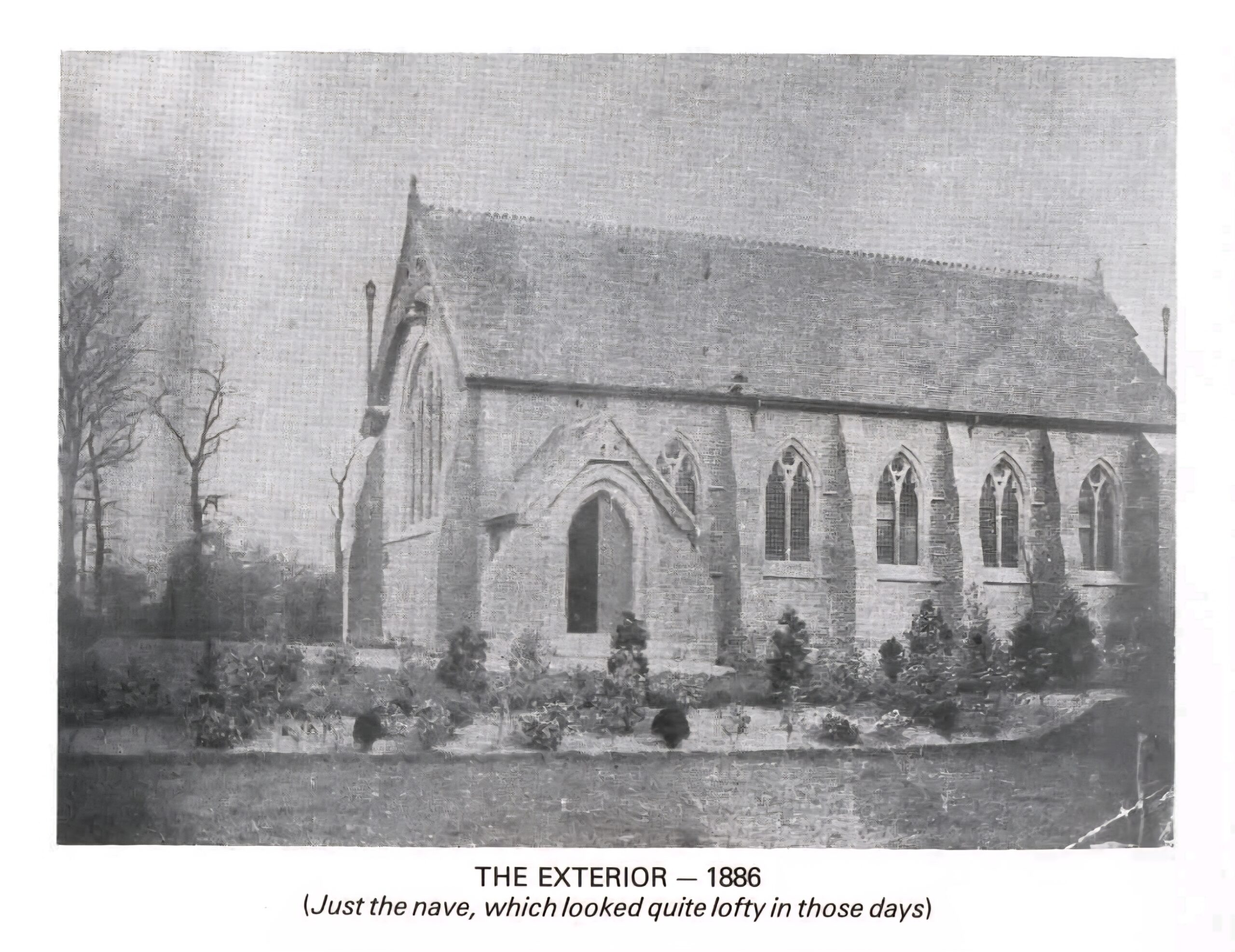
The first intention was to build an iron church on a plot of land opposite the Day School. It was discovered, however, that the owners of the Mapperley Park Estate (the Wright family Col. Charles Ichabod Wright, Messrs. Smith Wright and F. Wright) had set apart a piece of land, being the site of the present church. Once the transfer from the parish of Carrington to that of St. Ann’s had been negotiated successfully the plot was handed over on condition that the nave of a permanent church was built and not the iron church which had been contemplated. Plans were prepared and the foundation stone of the present nave was laid by Mr. William Windley on 10th April 1877.
On 29th November 1877 the Right Reverend Henry Mackenzie, the Bishop Suffragan of Nottingham, officiated at the opening service. In the course of his sermon based on John 6, verses 11, 12 (the miracle of the loaves and fishes) the Bishop spoke of the importance of the church keeping pace with the growing population of our large town and commended the work done that day to the prayer and support of those for whom it was built. The Bishop was referring to the Nottingham Borough Extension Act which received the Royal Assent in June of that year. By this Act the town took over the parishes of Sneinton, Lenton, Radford, Basford and Bulwell and that part of the parish of Gedling which contained the Mapperley Hospital. The result of this was an increase in population from 86,000 approximately to over 157,000. The Reverend H. Lonsdale was appointed as the first curate-in-charge and Messrs. J. W. Windley and W. H. Butler were the first church- wardens.
St. Jude’s Chapel of Ease (subordinate church) to St. Ann’s Church had arrived.